Comment: Why temporary seating needs still require clinically appropriate solutions
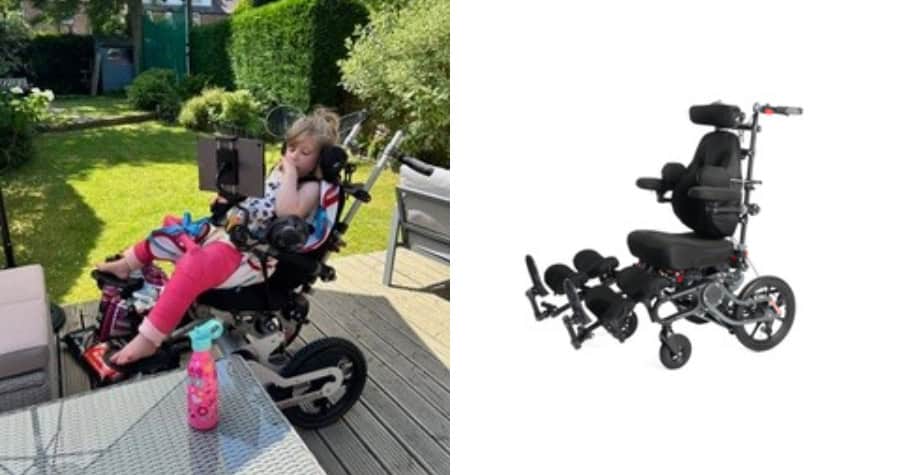
For children and young people recovering from surgery, trauma or undergoing rehabilitation, changes in mobility may be temporary – but that does not make their seating and postural needs any less important.
British wheelchair manufacturer Chunc discusses why clinically appropriate transitional seating can play an important role in supporting posture, function and participation throughout recovery.
Orthopaedic surgery, spinal correction and traumatic injury can result in a significant, if temporary, change in a young person’s mobility.

During recovery, activities that were previously routine such as sitting for meals, travelling to appointments, taking part in family life or returning to school, can suddenly become difficult or impossible without appropriate support.
For some children and young people, this may be the first time specialist seating is required. Others may already have complex postural management programmes in place, but surgery or injury can temporarily change their positioning requirements and make their existing equipment unsuitable.
These needs might exist for only a few weeks or months, but they remain clinically important.
Maintaining posture, supporting function and enabling participation throughout recovery can have an important role in comfort, independence and the continuity of rehabilitation.
The challenge is that these transitional periods do not always fit neatly within established equipment provision pathways. Clinicians can therefore find themselves needing to identify practical solutions that bridge the gap between hospital discharge and a return to a young person’s longer-term seating provision.
The clinical importance of transitional seating
Specialist transitional seating is about much more than simply providing somewhere to sit.
The right solution can help maintain therapeutic goals established before surgery or injury while enabling the young person to continue their rehabilitation in everyday environments.
Appropriate seating during rehabilitation can help maintain postural alignment during periods of reduced mobility, while supporting pressure management and comfort. It can also enable children and young people to continue participating in everyday life at home, school and in the community, while reducing some of the physical demands placed on parents and carers. Crucially, the right seating can promote confidence during rehabilitation and help maintain continuity with established postural management strategies.
Importantly, seating requirements may continue to change as recovery progresses.
Access to equipment that can accommodate these temporary clinical requirements gives clinicians greater scope to respond to a young person’s changing needs without losing sight of their longer-term rehabilitation goals.
What happens when transitional needs are not addressed?
A lack of appropriate seating during recovery can create challenges extending well beyond mobility.
A child or young person may experience reduced participation in education and everyday activities, increased fatigue or discomfort and greater reliance on parents and carers for positioning and transfers.
It can also disrupt established postural management programmes, potentially affect rehabilitation progression and make the return to familiar everyday routines more difficult.
Temporary needs should not therefore be viewed as insignificant needs. For the young person and their family, the consequences of inadequate support during this relatively short period can be considerable. Find out more about Chunc’s short-term wheelchair rental solutions.
Creating a transitional care pathway
Effective transitional seating provision should consider the whole rehabilitation journey rather than viewing the wheelchair or seating system simply as a short-term piece of equipment.
This starts with identifying the clinical need and assessing the young person’s posture, functional requirements and environment.
From there, appropriate transitional seating can be provided to support continuity of rehabilitation and, ultimately, the return to everyday function.
Three considerations are particularly important: posture, function and environment.
Posture – Maintaining appropriate alignment and positioning can support comfort, pressure management and therapeutic outcomes throughout recovery.
Function – Appropriate seating can enable the young person to participate in education, therapy, family life and everyday activities while undergoing rehabilitation.
Environment – The equipment needs to work where recovery actually takes place. That means considering not only clinical or hospital environments, but the realities of the young person’s home, school, community and transport arrangements.
Bringing these considerations together can help clinicians identify solutions that support recovery while fitting into everyday life. For further information on how Chunc’s Spica Rental Service supports the clinical pathway, read the clinical overview.
The difference appropriate positioning can make
One recent case highlights the importance of considering seating as part of the wider rehabilitation pathway.
Following discharge from intensive care after complex spinal surgery, LJ required an urgent specialist seating assessment.
She remained medically fragile, was oxygen-dependent and struggled to tolerate supported positioning.
Within minutes of being appropriately positioned, LJ’s oxygen saturation improved from 87 per cent to 97 per cent.
She also appeared noticeably calmer and more comfortable and was better able to tolerate sitting. This enabled her rehabilitation to continue while supporting the transition from hospital back into her home environment.
Cases such as this demonstrate why a temporary requirement should not be mistaken for a minor one.
When a young person’s mobility, posture and function have changed significantly, appropriate seating can form an important part of maintaining participation and supporting rehabilitation until their longer-term needs can once again be met.
Bridging the gap following surgery and trauma
Chunc will explore the subject further in its 30-minute educational seminar, ‘Bridging the Gap: A Transitional Care Pathway for Young People Following Surgery and Trauma’, at OTAC Cardiff and OTAC London.
The session will consider practical and clinical aspects of transitional seating provision for children and young people recovering from surgery or trauma, including:
- Identifying transitional seating needs
- Supporting posture, function and environmental suitability
- Maintaining continuity throughout rehabilitation
- Preventing disruption to established postural management plans
- Practical considerations when making a referral
The seminar will provide an opportunity for occupational therapists and other professionals to discuss how transitional seating can help bridge the period between hospital discharge, rehabilitation and a young person’s return to everyday life.