Clinicians regain access to key children’s postural care products after Jiraffe relaunch
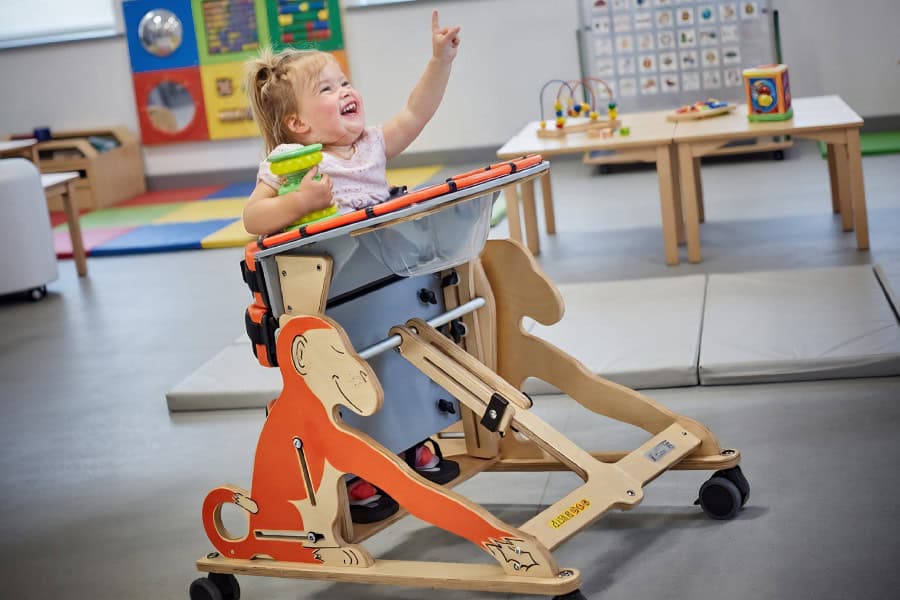 Specialist paediatric postural care equipment provider Jiraffe has announced the return of a key postural care product range for children with cerebral palsy and similar conditions, following demand from therapists and families.
The range provides life-changing support across the three primary posture positions of standing, sleeping and seated therapy, helping children maintain better posture, reduce the risk of secondary complications and take part more comfortably in therapy and daily life.
The products, which were previously designed and manufactured by Jenx, were discontinued following the closure of Jenx’s manufacturing operations in 2025. Since then, Jiraffe has heard from therapists who continued to value the range and wanted to see it return, because they could not always find suitable alternatives for the children they support.
Now, Jiraffe, the UK distribution arm of Jenx, has secured alternative manufacturing facilities and is integrating the range into its wider portfolio, which covers every aspect of daily life, including sitting, standing, sleeping, bathing and mobility.

To design and manufacture the returning products, Jiraffe has partnered with Sheffield-based company, NorthSky, and production facilities in the UK and Taiwan.
The returning products include both the Monkey Prone and Supine Standers, supporting early-stage progression into upright standing and robust supine standing; the Dreama Sleep System, which ensures continual therapeutic positioning during rest and sleep; and the Corner Seat and Nursery Table, which facilitate independent long-leg sitting, therapy and functional floor-based play. Together, the range supports 24-hour postural management.
While latest NHS guidance for cerebral palsy and similar conditions recommends early intervention and 24-hour postural management in order to improve developmental outcomes, research shows that, due to a lack of training, many paediatric therapists are unsure what equipment is currently available or how it should be used.
To address this knowledge gap, Jiraffe has also launched ‘Shape Their Day’, a new education platform to help paediatric occupational therapists and physiotherapists build their postural management skills and product knowledge.

The platform will outline the uses and benefits of each returning product, along with education on 24-hour postural management and why providing holistic support across all three primary posture positions is so important.
Holly Jenkins, Managing Director at Jiraffe, said: “Over the last 12 months, paediatric therapists have told us just how much of a difference this postural care range makes to the lives of children with complex disabilities and their families. After working hard to secure alternative manufacturers, we’re delighted to reintroduce these life-changing products, enabling therapists to continue providing first-class care.
“As part of this reintroduction, we are also looking to support therapists beyond product availability, helping them build confidence in how and when equipment can be used as part of wider postural care and therapy programmes. The ‘Shape Their Day’ education platform has been created to bring this vital clinical knowledge and practical support together in one accessible place.”
Commenting on the launch of Shape Their Day, Hannah Spink, a specialist paediatric physiotherapist and joint clinical director at Bumble Bee Physiotherapy, said: “24-hour postural management is vital for preventing long-term complications in children with complex needs, but keeping up to date with the latest equipment and clinical strategies can be challenging for busy frontline therapists.
“For families and therapists, the challenge is not simply finding equipment, but finding the right support at the right time to help each child progress safely and take part more fully in everyday life.
“Having access to educational resources like the ‘Shape Their Day’ platform is incredibly valuable. When clinicians feel confident in the equipment available and how it can be used, they are better placed to guide families towards solutions that support comfort, participation and long-term wellbeing. By bridging this knowledge gap, the platform will enable therapists to prescribe the right equipment at the right time, improving long-term outcomes for the children and families we support.”